Your Floors vs. a Northeast Winter: How to Choose Materials That Actually Hold Up
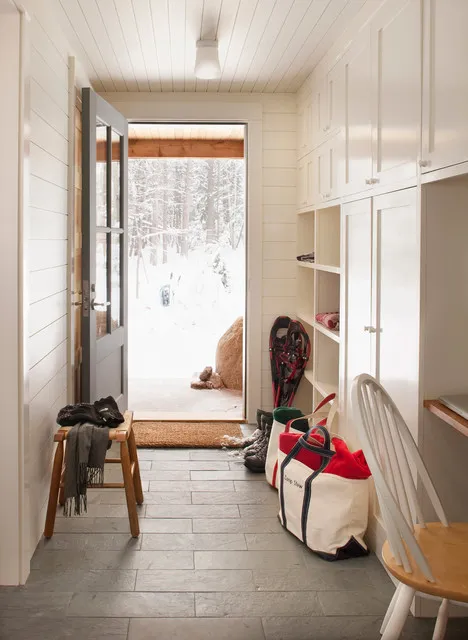
Photo: Northeast home entryway winter flooring snow boots mudroom, via st.hzcdn.com
Northeast Floors Face Conditions Most People Underestimate
If you've lived in the Pelham area for more than a full calendar year, you already know what we're talking about. January brings bone-dry indoor air and subzero wind chills. March turns your entryway into a mud wrestling arena. July and August push indoor humidity into the uncomfortable zone. Then fall arrives with its temperature swings and wet leaves tracked in from the yard.
Your floors experience all of it. And not every flooring material is built to handle that kind of range.
This guide is designed specifically for homeowners in the Northeast—people dealing with real freeze-thaw cycles, real humidity swings, and real seasonal foot traffic patterns. We'll walk through which materials perform best in these conditions, how to maintain what you have, and what preventative steps can add years to the life of any floor.
Why Climate Matters More Than Most Flooring Guides Admit
A lot of flooring content online is written for a general audience—or worse, a climate-controlled showroom audience. What works beautifully in a Phoenix home or a climate-controlled new construction condo doesn't always translate to a 1950s colonial in Westchester County.
The core issue is moisture and temperature fluctuation. Wood expands when it absorbs humidity and contracts when the air dries out. Tile grout can crack when subfloors flex during freeze-thaw cycles. Vinyl can become brittle in extreme cold. These aren't rare edge cases—they're predictable outcomes when materials are mismatched to their environment.
Choosing flooring for the Northeast means thinking about the full year, not just how it looks in the showroom.
Solid Hardwood: Beautiful but Demanding in This Climate
Solid hardwood is gorgeous, there's no question about it. But it's also the most climate-sensitive option on the market. In the Northeast, solid hardwood needs to be carefully managed year-round.
During winter, when heating systems strip humidity from the air, hardwood can shrink and develop gaps between boards. In summer, that same wood absorbs moisture and expands, sometimes causing cupping or crowning if the conditions are severe enough.
This doesn't mean hardwood is off the table—it means you need to be prepared to manage it. A whole-home humidifier running through winter, air conditioning in summer, and area rugs near entryways go a long way. Solid hardwood also shouldn't be installed below grade or in basements, which is worth knowing if you're finishing a lower level.
If hardwood is your priority, wider planks are actually more susceptible to movement than narrower ones. Narrower boards, quarter-sawn cuts, and species like white oak (which is naturally more stable than red oak) are smarter choices for our region.
Engineered Hardwood: The Northeast-Friendly Compromise
Engineered hardwood has earned its popularity in climates like ours for good reason. Its layered construction—a real wood veneer over a plywood or HDF core—gives it significantly better dimensional stability than solid hardwood. It handles humidity swings more gracefully, can be installed in basements, and still gives you the authentic wood look and feel.
For most Pelham-area homeowners who want the warmth of wood without the high-maintenance demands, engineered hardwood is genuinely the sweet spot. Just make sure you're looking at products with a thick enough veneer to allow for at least one or two refinishings over the years—budget engineered products sometimes skimp on this.
Luxury Vinyl Plank: The Practical Workhorse
Luxury vinyl plank (LVP) has become one of our most popular recommendations for Northeast homes, and it earns that position. It's 100% waterproof, highly resistant to temperature fluctuations, and holds up exceptionally well in high-traffic areas and wet zones like mudrooms and bathrooms.
For entryways that take a beating from wet boots and muddy paws from November through April, LVP is hard to beat. It won't warp from moisture, it's easy to clean, and modern options look remarkably convincing.
One caveat worth mentioning: LVP can be sensitive to extreme temperature changes if it's installed without proper acclimation or in spaces that get very cold (think unheated three-season rooms or garages). In those edge cases, the material can contract more than expected. In a properly conditioned living space, though, it performs beautifully.
Tile: Durable, But Your Subfloor Is the Real Story
Porcelain and ceramic tile are inherently waterproof and nearly impervious to humidity changes. In theory, they're ideal for a wet climate. In practice, their performance in the Northeast depends heavily on what's underneath them.
Freeze-thaw cycles cause subfloors to flex slightly as temperatures change. If the subfloor isn't adequately rigid and the tile installation doesn't use the right membrane and mortar system, grout cracks and tile loosening are predictable outcomes—sometimes within just a few years.
A quality tile installation in our region typically involves a decoupling membrane like Schluter DITRA, which allows for slight independent movement between the tile and the subfloor. It's an added cost, but it's the difference between a tile floor that lasts 30 years and one that starts failing in five.
The Entryway Problem: Every Northeast Home Has One
Regardless of what flooring you choose throughout the rest of your home, your entryways deserve special attention. This is where the outside world—wet, muddy, salty, and cold—makes first contact with your interior.
A few practical strategies that work well here:
- Durable, easy-clean flooring at entries: Tile, stone, or LVP in the foyer creates a natural transition zone that can take abuse.
- Quality entry mats, inside and out: A good exterior scraper mat and an interior absorbent mat can dramatically reduce what gets tracked in.
- Transition strips between materials: Where your entry floor meets hardwood or carpet, proper transitions protect the edges of both materials.
- Seasonal rugs: Many Northeast homeowners keep a heavier, washable runner near the door from November to April and swap it out for spring and summer.
Maintenance Strategies for Year-Round Protection
Even the most climate-appropriate flooring needs regular care to perform at its best. A few habits that make a real difference:
Winter: Keep interior humidity between 35–50% to prevent hardwood from over-drying and developing gaps. Wipe up melted snow and salt promptly—salt is particularly damaging to hardwood finishes and grout.
Spring: Deep clean floors after mud season. Check for any moisture damage near exterior doors or windows. This is a good time to reapply hardwood floor finish if needed.
Summer: Use AC or a dehumidifier to keep indoor humidity in check. High humidity over extended periods is one of the leading causes of hardwood cupping in our region.
Fall: Inspect transitions, thresholds, and any areas near exterior walls for early signs of wear or moisture infiltration before winter sets in.
Let Local Knowledge Work for You
Generic flooring advice can only take you so far. The specific conditions in the Pelham area—the age of local housing stock, the way our winters behave, the humidity patterns we see in summer—all factor into what actually works here versus what just looks good on paper.
At Flooring Pelham, this is the kind of conversation we have every day. We know these conditions firsthand, and we carry products specifically suited to perform in them. Whether you're replacing a worn-out entryway, finishing a basement, or redoing the main level of your home, we're happy to help you find something that looks great and actually holds up to everything a Northeast year throws at it.
Stop by our showroom or reach out to set up a consultation. We'll help you think through the whole picture—not just the pretty part.