Tougher Isn't Always Better: How to Stop Picking the Wrong Floor for Your Space

Photo by Photo by Tile Merchant Ireland on Unsplash on Unsplash
There's a persistent idea floating around that commercial flooring is just... better. More durable. More serious. Like if you put commercial-grade LVP in your home, you're getting something that transcends ordinary residential concerns. And sure, there's a kernel of truth in there. But it's also the kind of oversimplification that leads homeowners to install floors that feel cold, loud, and weirdly institutional—and leads small business owners to put down gorgeous hardwood that's destroyed within eighteen months.
The real question isn't which is tougher. It's which is right for how a space actually gets used.
These Products Are Engineered for Different Worlds
Commercial and residential flooring aren't just different grades of the same thing. They're built around fundamentally different assumptions about how people move through spaces.
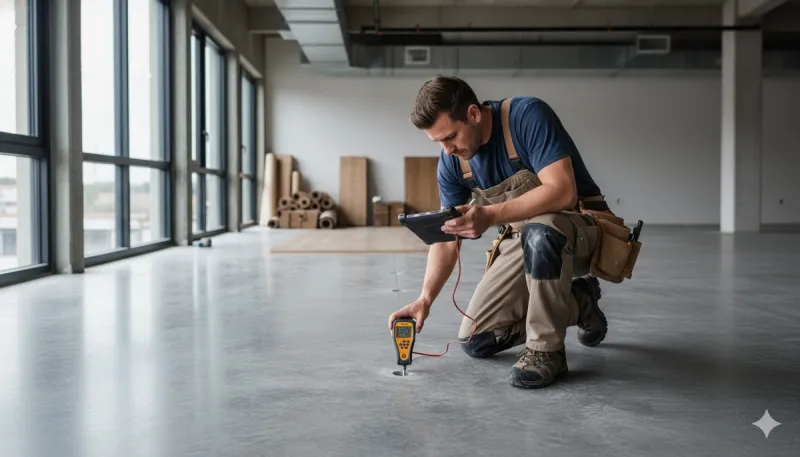
Commercial flooring is designed for volume. We're talking about the kind of foot traffic that happens in a grocery store, a hospital corridor, or a busy restaurant—hundreds or thousands of people per day, often in shoes that have been through parking lots and sidewalks. The materials prioritize wear resistance, ease of maintenance, and compliance with safety standards like slip ratings and fire codes. They're also engineered to handle wheeled carts, rolling equipment, and in some cases, chemical cleaning agents that would wreck a residential product.
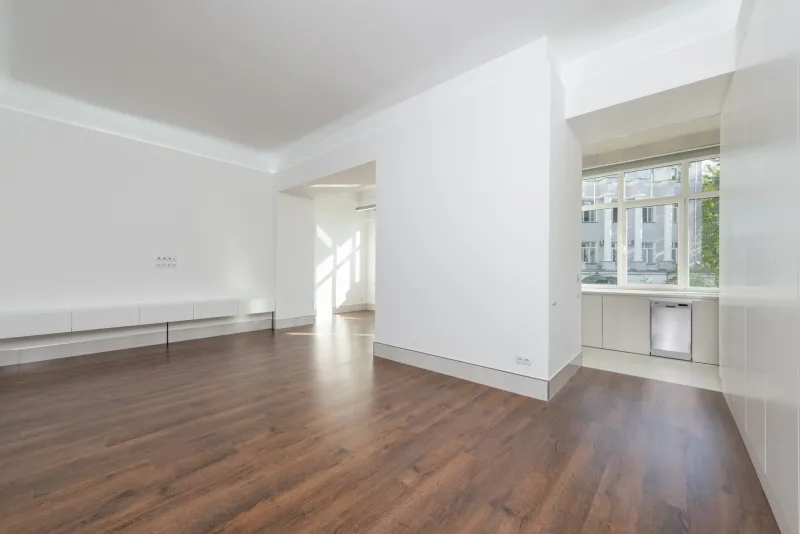
Residential flooring is designed for comfort and livability. The traffic assumptions are completely different—maybe a few dozen foot interactions per day in a busy household, mostly in socks or casual shoes. The design priorities shift toward warmth underfoot, acoustic performance, aesthetic variety, and how the floor interacts with furniture, pets, and kids. Residential products often have thicker wear layers in the places that matter for home use, better sound dampening, and finishes optimized for the way homeowners actually clean.
When you mix these up, you're fighting the engineering rather than benefiting from it.
What Happens When Homeowners Go Commercial
Let's say you're renovating your Pelham home and you've heard that commercial LVP is basically indestructible. So you spec something rated for heavy commercial use and have it installed throughout your main floor.
First issue: comfort. Commercial vinyl is often thinner and installed over concrete slabs or specific commercial substrates. In a residential setting, it can feel hard and unforgiving underfoot, especially over a wood subfloor. The acoustic properties are also different—commercial floors are designed for spaces where ambient noise is already high. In a quiet home, every footstep can sound like a hollow knock.
Second issue: aesthetics. Commercial products tend to have more conservative design options. The visual variety that makes residential flooring so appealing—wide planks, realistic wood grain, varied color palettes—is often limited in commercial lines because consistency and uniformity matter more than character.
Third issue: you may be paying for performance you don't need. That heavy-duty wear layer is overkill for a household with two adults and a golden retriever. You've spent more money for specs that your actual lifestyle will never stress-test.
None of this means commercial products are bad. They're excellent—in commercial applications.
What Happens When Businesses Go Residential
Now flip it. A small boutique opens on a busy street in town. The owner wants warmth and character, so they choose a beautiful engineered hardwood that looked stunning in the showroom. It's a quality residential product with a solid wear layer and a great finish.
Within a year, there are problems. The finish is scuffed from foot traffic that never lets up. Dirt and grit tracked in from the sidewalk act like sandpaper on every customer pass. The humidity from a commercial HVAC system—which cycles differently than a home system—is causing movement in the planks. Cleaning crews using commercial-grade products are dulling the finish faster than it can be maintained.
The floor wasn't bad. It was just designed for a home, not a retail environment. The residential wear layer, however thick, wasn't built to handle that kind of abrasion frequency. The finish chemistry wasn't tested against commercial cleaning solutions. The installation spec didn't account for the slab conditions common in commercial buildings.
This is a full replacement scenario, and it usually happens right around the time the business is trying to grow rather than spend money on floors again.
The Metrics That Actually Matter
Rather than thinking in terms of commercial versus residential as a quality hierarchy, think in terms of specific performance metrics matched to your actual use case.
Wear layer thickness matters, but context matters more. A 12-mil wear layer on a residential LVP is plenty for most homes. A 20-mil layer makes sense for a moderate-traffic commercial space. But wear layer alone doesn't tell you about dimensional stability, acoustic performance, or finish chemistry.
Traffic patterns in commercial spaces are often linear—people moving along defined paths. Residential traffic is scattered and variable. Products engineered for linear commercial wear may not distribute stress as well in a home where people move in every direction.
Maintenance compatibility is huge for commercial spaces. If your cleaning protocol involves wet mopping with commercial detergents, your flooring needs to be spec'd for that. Most residential products aren't.
Subfloor conditions differ dramatically. Commercial spaces often go over concrete. Residential installations frequently involve wood subfloors with more flex and movement. A product that performs perfectly on a rigid commercial slab may have issues on a wood subfloor in a 1950s Pelham colonial.
How to Have This Conversation with a Flooring Contractor
The most useful thing you can do before any flooring project—residential or commercial—is describe how the space actually functions. Not how you hope it will function. How it actually does.
How many people walk through daily? What kind of footwear? Are there pets, rolling chairs, heavy furniture? What's the cleaning routine going to look like? Is there a humidity control system? What's underneath the existing floor?
A contractor who asks these questions before recommending a product is one who understands that the spec sheet doesn't tell the whole story. At Flooring Pelham, we work with both homeowners and local business owners, and the conversation always starts the same way: tell us about your space, and we'll tell you what will actually hold up in it.
Because the most expensive floor you'll ever buy is the one you have to replace twice.