Open Concept, Closed Deal: How Mismatched Floors Are Quietly Killing Your Resale Price
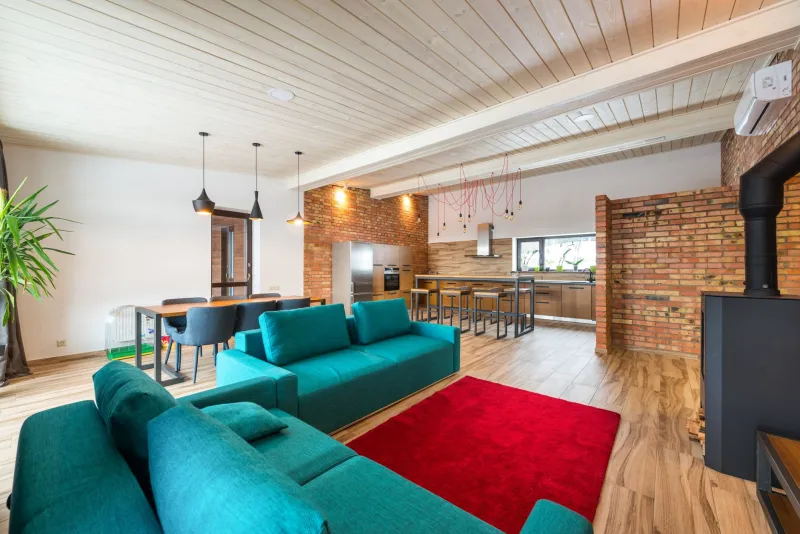
You spent real money on that kitchen tile. The living room hardwood is genuinely nice. The dining area has a solid luxury vinyl plank that's held up beautifully for five years. Individually? Each floor could stand on its own. But when a buyer steps through your front door and takes in the whole open-concept space in one glance — three different materials, three different tones, three different eras of renovation — the story changes fast.
That story costs you money at the negotiating table.
We see it regularly here in Pelham. Homeowners invest in quality flooring over time, making smart decisions room by room, only to discover at resale that the cumulative effect reads as unfinished or patched together. Buyers don't itemize what they're seeing. They just feel it. And that feeling translates directly into the number they put on paper.
Why Open-Concept Layouts Raise the Stakes
Closed-off rooms are forgiving. A hallway, a doorway, a change in ceiling height — these are natural visual breaks that let different flooring materials coexist without much friction. Buyers mentally compartmentalize. This is the kitchen. This is the living room. The transition makes sense.
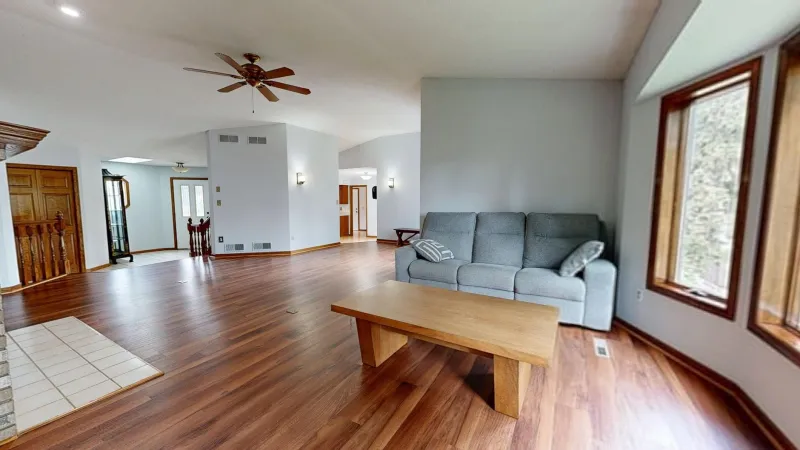
Open-concept spaces don't work that way. When your kitchen, dining area, and living room flow together without walls to interrupt the sightline, your flooring becomes a single continuous visual statement — whether you planned it that way or not. Every inconsistency gets amplified. A slight color mismatch that would go unnoticed behind a doorframe becomes glaring when it runs across 800 square feet of uninterrupted sight line.
Real estate agents who work the Pelham and Westchester market will tell you the same thing: buyers in open-concept homes are subconsciously evaluating the floor as a whole, not its individual parts. When that evaluation turns negative, it rarely surfaces as a specific complaint about flooring. It shows up as vague hesitation — "it just doesn't feel right" — which is buyer-speak for a lower offer.
The Premium Materials Trap
Here's where a lot of homeowners get tripped up: they assume that quality is a defense. If the hardwood is genuine white oak and the tile is a high-end porcelain, the materials should speak for themselves, right?
Not quite. Quality and continuity are two different things, and buyers respond to both — but not equally. A home where every floor is mid-grade but flows seamlessly from room to room consistently outperforms a home with premium materials that clash visually. Continuity signals intention. It signals that someone thought about the whole space, not just individual upgrades.
Mismatched premium materials actually create a specific kind of buyer skepticism. Instead of thinking "this home has been well-maintained," they start thinking "this home has been pieced together over time." That's a subtle but significant shift. Pieced-together homes invite negotiation on price. Move-in-ready homes don't.
What Buyers Are Actually Penalizing
Let's be specific about what triggers the discount. It's not always about the materials themselves — it's about the visual signals those materials send when they're in the same space.
Tone conflicts are the biggest offender. Warm honey-toned hardwood running up against cool gray LVP creates visual tension that buyers can't quite articulate but absolutely feel. Even if both floors are attractive on their own, the contrast reads as an error.
Scale mismatches are a close second. Wide-plank hardwood transitioning to small-format tile without a thoughtful border or transition element feels abrupt. The eye doesn't know where to land.
Finish inconsistencies matter more than most people realize. A matte hardwood next to a high-gloss tile in the same sightline creates a jarring shift in light reflection that makes the space feel visually chaotic — especially in photographs, which is where most buyers form their first impression before they ever set foot in your home.
Era mismatches are the subtlest but still register. Flooring styles carry visual timestamps. Certain plank widths, certain grout widths, certain finish sheens — they all signal a decade. When buyers see two floors that look like they came from different eras of renovation, they start doing math on what else might be mismatched or outdated.
Transitions Aren't Just Functional — They're Strategic
A well-executed transition between flooring materials can do a lot of heavy lifting. The right threshold, a thoughtful border detail, or a deliberate material change that's been designed rather than stumbled into — these details shift the buyer's read from "patchwork" to "intentional."
The key word is intentional. Buyers are remarkably good at sensing whether a design decision was planned or improvised. A transition strip that was clearly chosen to complement both floors communicates that someone was paying attention. A mismatched reducer that was grabbed off a shelf to fill a gap communicates the opposite.
If you're planning to list your Pelham home in the next year or two and you've got mismatched floors in an open-concept space, a professional consultation on transitions and continuity is one of the highest-ROI conversations you can have. Sometimes the answer is a full replacement. Sometimes it's a strategic refinish to bring existing hardwood closer in tone to adjacent materials. Sometimes it's as simple as selecting the right transition hardware and adding a well-placed area rug to visually anchor a zone.
None of those solutions are as expensive as the negotiation discount you'll absorb if you list without addressing it.
The Move-In Ready Premium Is Real
Buyers in today's market are tired. They've been through competitive bidding, rising rates, and the mental exhaustion of a long search. When they walk into a home that feels genuinely finished — where they can picture themselves living without a single project on the to-do list — they pay for that feeling. Sometimes significantly.
Flooring continuity is one of the fastest signals of move-in readiness. It's not the only one, but it's among the most immediate. A cohesive floor plan (in the literal sense) tells buyers that the home was cared for thoughtfully, not just maintained reactively.
If your open-concept space is currently telling a fragmented story, it's worth the conversation before you list. Stop in and see us at Flooring Pelham — we work with homeowners at exactly this stage all the time, and we know what buyers in this market are responding to. Sometimes a relatively modest investment in floor continuity is the difference between a clean offer and a negotiation that chips away at everything you've put into your home.