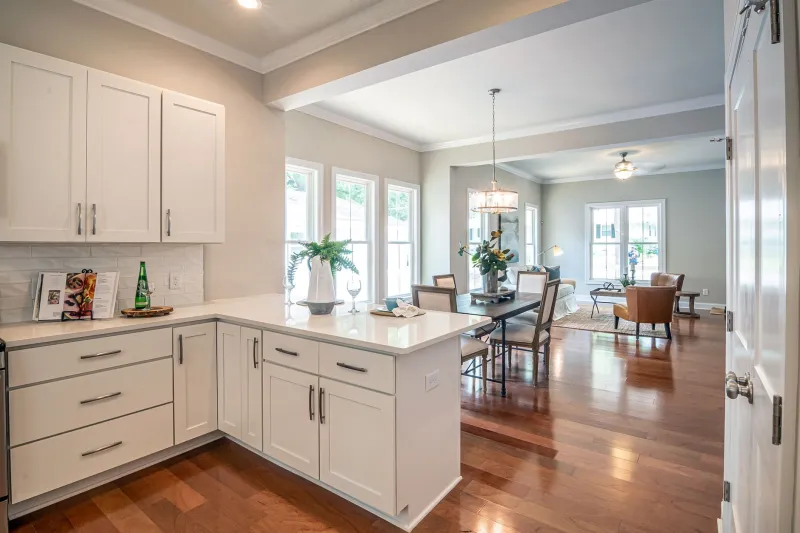
Why the Floor You Loved at the Showroom Looks Completely Different Once It's in Your Home
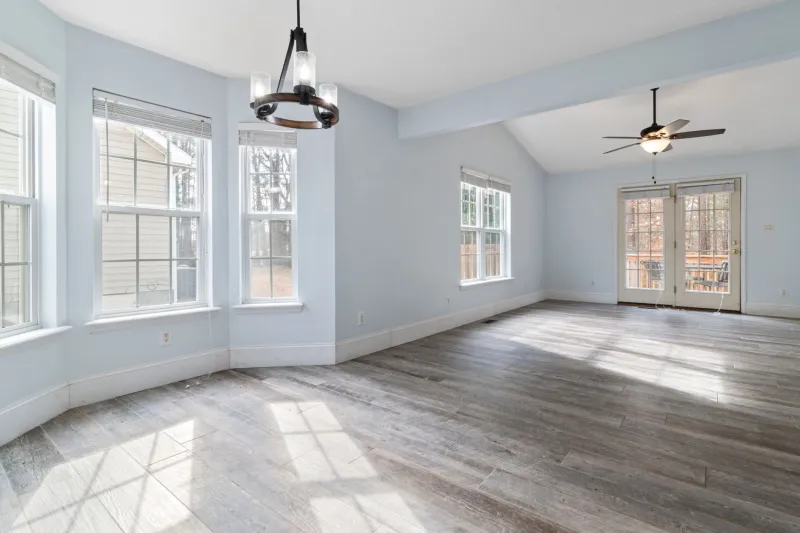
It happens more often than most people expect. A homeowner spends an afternoon at a flooring showroom, falls hard for a particular plank, orders it, watches it go in — and then stands in their finished room feeling vaguely let down. The floor looks fine. Maybe even good. But it's not the floor they fell in love with. Something is different, and they can't quite put their finger on what.
Nine times out of ten, the culprit is light.
Not the product. Not the installation. Light.
Showrooms Are Lit Like Stage Sets — On Purpose
This isn't a conspiracy. It's just smart retail design. Flooring showrooms use high-output, broad-spectrum lighting positioned to make every surface look its richest and most dimensional. Warm-toned woods glow. Cool-toned luxury vinyl looks crisp and clean. Tile grout lines appear sharp and intentional rather than grubby. Everything looks like it belongs in a magazine spread.
Your home doesn't look like that. Nobody's does.
Your living room has a north-facing window that floods the space with cool, flat light in the morning and goes almost dark by 3 p.m. in December. Your kitchen has recessed LED cans that cast a slightly blue-white light straight down. Your hallway might get no natural light at all. Each of those conditions will render the same floor sample in a completely different way — and none of them will look like they did under showroom lighting.
What Light Actually Does to Flooring
Let's get specific, because this is where the practical knowledge lives.
Warm light — think incandescent bulbs, warm-white LEDs, or afternoon sun — amplifies the red and gold tones in wood flooring. A floor that looked like a clean, neutral oak under showroom lighting might pull orange or honey in your living room. That's not necessarily bad, but if you were counting on neutral, it's a surprise.
Cool light — north-facing natural light, daylight-spectrum LEDs, overcast sky through a large window — pushes gray and blue undertones forward. A gray LVP that looked sophisticated and warm at the showroom can feel cold and clinical under the wrong light conditions. The same product, completely different personality.
Direct overhead light flattens texture. That gorgeous hand-scraped or wire-brushed surface that looked so dimensional in the showroom may lose most of its visual depth when a ceiling fixture is shining straight down on it.
Raking light — light coming in low and at an angle, like early morning or late afternoon sun through a side window — does the opposite. It exaggerates every texture, every scratch, every grain variation. Floors that look flawless at noon can look tired and marked-up at 5 p.m. when the sun is hitting them sideways.
The Time-of-Day Factor Most Homeowners Ignore
Professional installers know this, and it's one of the first things we mention to clients at our Pelham showroom: your floor looks different at every hour of the day.
Most homeowners evaluate samples once, usually in the middle of the day, and call it done. That's like test-driving a car only in an empty parking lot. You're not getting the full picture.
Here's what we recommend instead: get samples — actual physical samples, not just phone photos — and live with them for a full day. Place them on your actual floor in the room where the new material will be installed. Check them at these four moments:
- Morning light — whatever direction your windows face, morning light has a distinct quality. Blue-cool in the northeast, warmer in south and west-facing rooms.
- Midday — this is usually the brightest and most neutral read you'll get from natural light.
- Late afternoon — this is when raking light becomes a factor. If you have west-facing windows, this is critical.
- Evening with your actual artificial lighting on — this might be the most important test of all, since a huge percentage of the time you spend in your home happens after dark.
If a sample holds up and still feels right across all four of those conditions, you've found a winner.
The Sample Size Problem
There's another piece of the showroom illusion that doesn't get talked about enough: sample size.
The tiles or planks displayed in a showroom are usually shown in large, continuous runs — sometimes entire rooms. Your eye reads that as the finished look. But you go home with a 6x6 tile chip or a single 12-inch plank sample. That tiny piece cannot tell you how the pattern repeat will look across 200 square feet. It can't show you how the color variation between boards will distribute. It can't tell you whether the grout color you're pairing it with will make the whole floor feel heavier or lighter.
Whenever possible, ask for larger samples. Many manufacturers offer sample boards that show two or three planks side by side — that's a much more honest representation. For tile, try to get at least a 12x12 piece so you can see how one full tile actually reads in your room.
Practical Strategies That Actually Help
Beyond the sample test, here are a few things that genuinely make a difference:
Photograph the sample in your room. Your eye adapts to light conditions in ways your camera doesn't. A photo taken in your space will often reveal undertones and color shifts that you'd tune out in person.
Hold the sample against your walls, not your existing floor. Your wall color is going to be one of the primary visual relationships your new floor has to work with. Seeing them side by side is more useful than seeing the sample against whatever you're replacing.
Check it against your trim and cabinetry. In kitchens especially, the floor needs to work with the cabinet color and countertop. Bring a photo of those elements, or better yet, bring a door sample if you can swing it.
Ask about the finish sheen. High-gloss floors reflect light dramatically and will shift appearance more than matte finishes as lighting conditions change throughout the day. If you have a lot of variable light in your home, a lower-sheen finish is usually more forgiving.
What We Tell Clients Before They Order
At Flooring Pelham, we always send samples home with people before they commit. Always. No exceptions. Because we've been doing this long enough to know that what you love in our showroom needs to earn that same feeling in your house, under your lights, next to your walls.
If you bring a sample home and it changes on you — if it suddenly looks too yellow, or too cold, or too flat — that's not the sample failing. That's useful information. Come back and we'll find something that works in your actual environment, not just ours.
The goal is a floor you love every day, not just the day you ordered it.