What a Good Flooring Contractor Notices the Second They Walk Into Your Home
Most homeowners assume the flooring process starts when the material arrives and installation begins. In reality, the most important part of any flooring project happens before a single tool gets unpacked.
When an experienced installer from Flooring Pelham walks through your front door for the first time, they're not just making small talk and measuring rooms. They're conducting a quiet, systematic assessment of your home — looking for things that will directly affect how your new floors perform, how long they last, and whether the project goes smoothly or runs into expensive surprises.
Here's what that first walkthrough actually looks like from our side of the tape measure.
The Floor You Can't See Yet
The very first thing a seasoned installer evaluates isn't the room you want to renovate — it's what's underneath it.
Subfloor condition is the single biggest variable in any flooring project, and it's almost entirely invisible to homeowners. A concrete slab that looks perfectly solid can have moisture transmission issues that will destroy hardwood or buckle vinyl within a year. A wood subfloor that feels firm underfoot can have localized soft spots, high or low areas, or old adhesive residue from previous flooring that creates serious problems during installation.
When our team walks a room, we're pressing on the floor as we move, listening for squeaks and flexing, scanning for any visible signs of unevenness. We're also asking questions: What was here before? Has there ever been water damage in this room? Is there a basement or crawl space below?
The answers — and the physical evidence — tell us what prep work is needed before anything else can happen.
Reading the Moisture Signals
Moisture is the enemy of almost every flooring material, and it rarely announces itself obviously. Experienced contractors learn to look for indirect evidence: efflorescence (those white chalky deposits) on concrete, staining patterns along baseboards, slight discoloration in corners, or even just a particular smell in a basement or lower-level room.
In the Pelham area, we deal with real seasonal humidity swings. Homes that sit on slabs or have basements are particularly susceptible to moisture migration — especially in spring when groundwater levels rise and temperatures fluctuate. A room that feels perfectly dry in October might have measurable moisture issues in April.
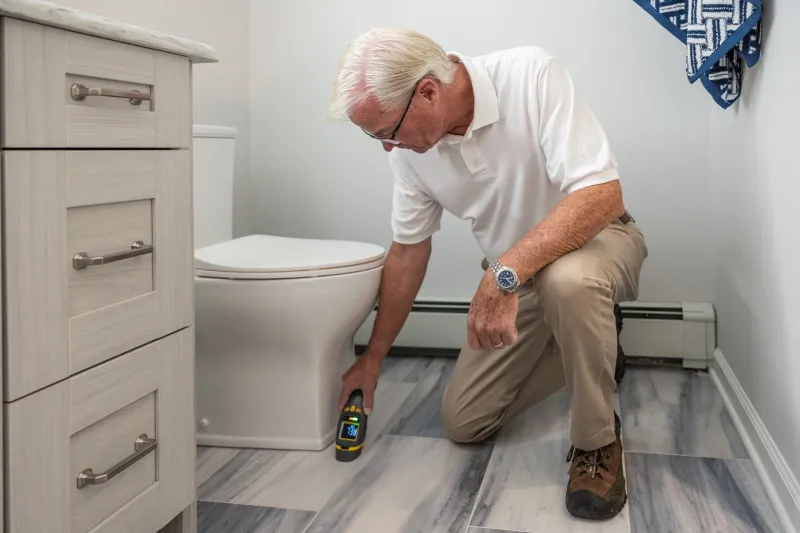
We use moisture meters to get actual readings, but the visual assessment that happens before any equipment comes out often tells us where to look. A homeowner might never notice the faint tide line along a baseboard. An installer with ten years of experience walks straight to it.
How Light Moves Through Your Space
This one surprises most people. Flooring contractors think about light — a lot.
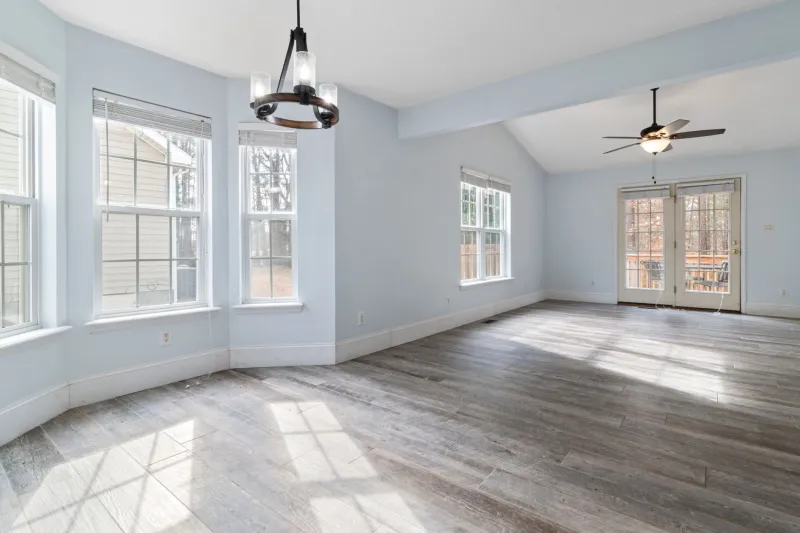
The direction your windows face, the color of your walls, the height of your ceilings, and the type of overhead lighting you have all affect how a floor will look once it's installed. A floor sample that looks perfect in a south-facing showroom can read completely differently in a north-facing bedroom that gets cool, indirect light all day.
When we walk a home, we're noting where natural light enters, how it moves across the floor plane at different times of day, and whether there are areas where shadows collect. This directly influences our product recommendations — particularly around sheen levels, grain patterns, and color values.
A high-gloss finish in a room with lots of raking afternoon light will show every footprint and dust particle. A hand-scraped texture in a dark hallway might look muddy rather than rustic. These aren't guesses — they're observations based on what we can see in your actual space.
Transitions, Traffic Patterns, and Design Conflicts
Another thing that experienced eyes catch immediately: where your floors meet, and how traffic actually flows through your home.
Transitions between rooms — especially in open-concept layouts — require careful planning. If you're installing new hardwood in the living room and it needs to meet existing tile in the kitchen, the height difference, the direction of the planks, and the transition strip all need to be thought through before installation begins. Getting this wrong is expensive to fix and visually jarring to live with.
We also look at traffic patterns. Where do people actually walk? Where do they cut corners? Where do kids or pets concentrate their movement? High-traffic pathways need different material considerations than low-traffic areas, and a floor that's perfect for a formal dining room might be a disaster in a mudroom.
Structural Red Flags That Need to Be Addressed First
Occasionally, a walkthrough surfaces something that needs to stop the conversation entirely — not because the project can't happen, but because something structural needs to be addressed before flooring can be installed responsibly.
We've walked into rooms where the subfloor had significant rot from an old leak that was never properly remediated. We've seen joists that were deflecting enough to cause any rigid flooring to crack within months. We've identified areas where previous flooring was installed over materials that contained asbestos, which requires specific abatement before any demo work can proceed.
None of these are reasons to walk away from a project. But they're absolutely reasons to pause, get the right professionals involved, and do it right before doing it pretty.
Why This Matters for Homeowners in Pelham
The difference between a flooring project that holds up beautifully for twenty years and one that starts causing problems in year two often comes down to what happened — or didn't happen — before installation began.
At Flooring Pelham, we take the initial walkthrough seriously because we've seen what happens when it's skipped or rushed. Problems that could have been identified and addressed in a two-hour assessment turn into warranty disputes, callbacks, and expensive remediation.
When you work with us, you're not just getting installation labor. You're getting the diagnostic expertise that comes from doing this work, in homes like yours, for years. That first walkthrough is where we earn your trust — by telling you what we see, not just what you want to hear.